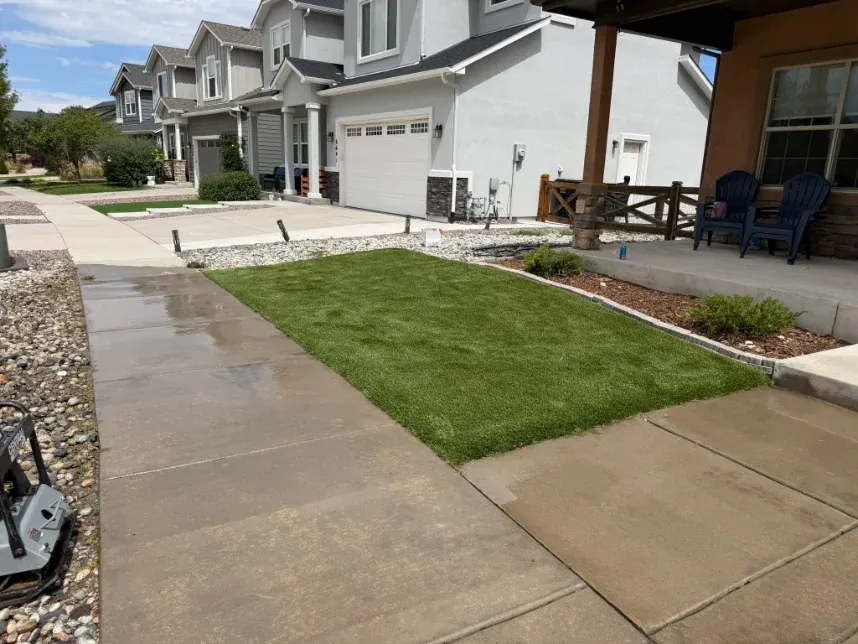
Hail rarely hurts artificial turf. The fibers flex instead of breaking the way living grass and plants get shredded, and there's no lawn to recover. After a storm, the work is usually just clearing leaves, shredded plant debris and hailstones, then brushing any matted spots. What hail can damage is everything around the turf, like plants, gutters and window screens.
Why turf holds up
The Front Range sees hail most summers. On a real lawn, a bad storm shreds blades and leaves the grass to recover over weeks. Turf fibers bend and spring back, the backing sits on a compacted base, and the hail melts and drains through.
After a storm
- Let the hail melt. It drains through the backing and base.
- Blow or rake off shredded leaves and plant debris before it breaks down on the turf.
- Brush matted spots against the grain to stand the fibers back up.
- Check edges and seams near downspouts and gutters, where water may have rushed over.
What does get damaged
Plants in the beds around the turf, young trees, gutters and window screens take the hit in a hailstorm. Overflowing gutters can also push a lot of water onto one spot, so it's worth checking that downspouts drain away from turf edges.
Hail and a real lawn
A grass lawn usually recovers from hail with water and time, but it can look rough for weeks. If you're weighing turf against sod, our comparison guide covers the trade-offs.
Questions
Will hail tear artificial turf?
It's very unlikely. The fibers flex and spring back. Hail damage to turf is rare.
How do I clean turf after a hailstorm?
Let the hail melt, blow off leaves and debris, and brush any matted spots.
Does hail damage turf seams?
Not usually. If gutters overflowed onto one spot, check the nearby edges and seams.
Is turf a good choice for hail-prone areas?
Yes. It doesn't need to recover after a storm the way grass does.
 Turf in winter
 Cleaning turf
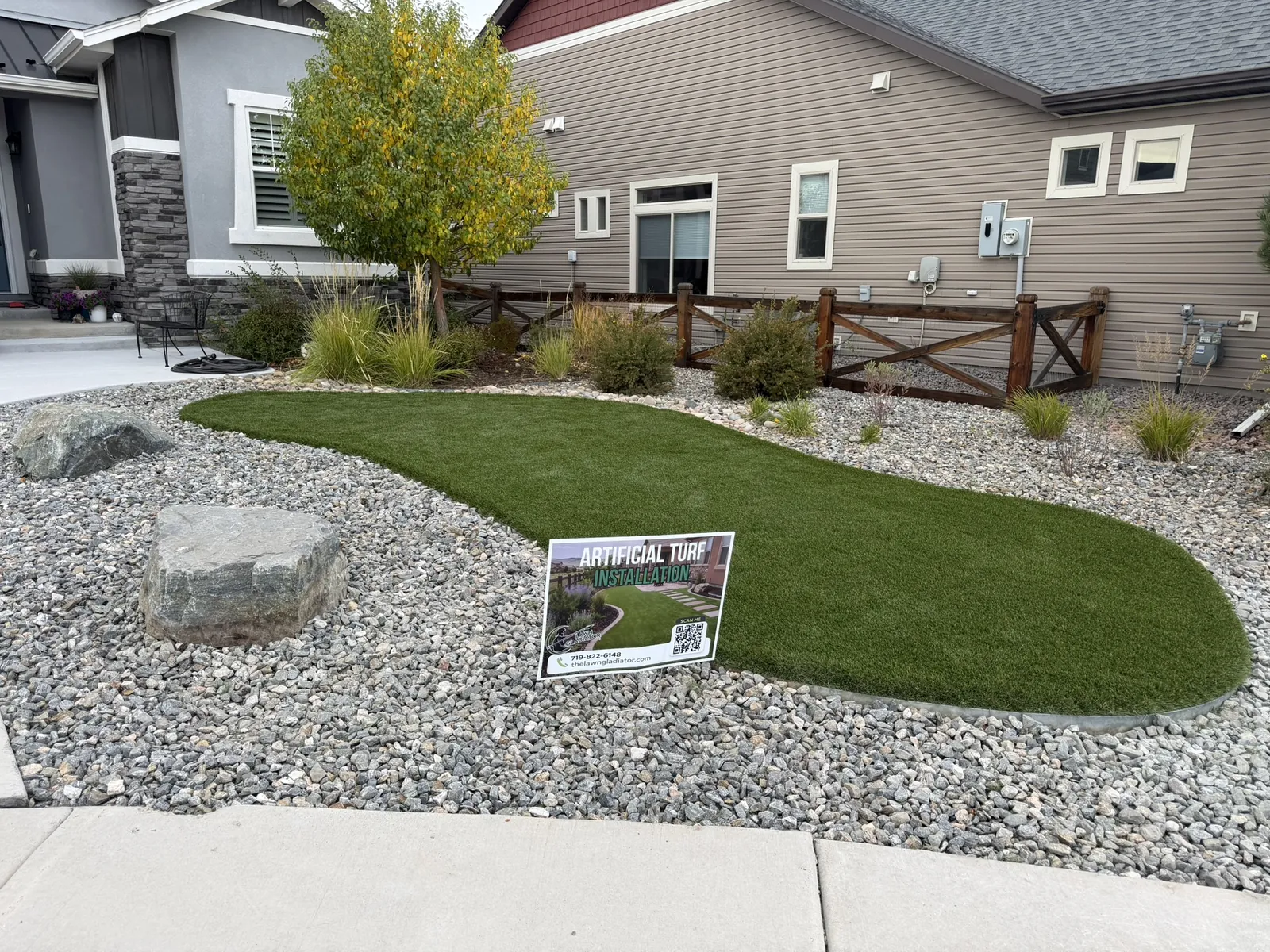 Artificial turf