
Retaining walls in Colorado Springs
Block and stone walls and tiered beds for sloped yards, built on a gravel footing with drain rock and pipe behind every wall.
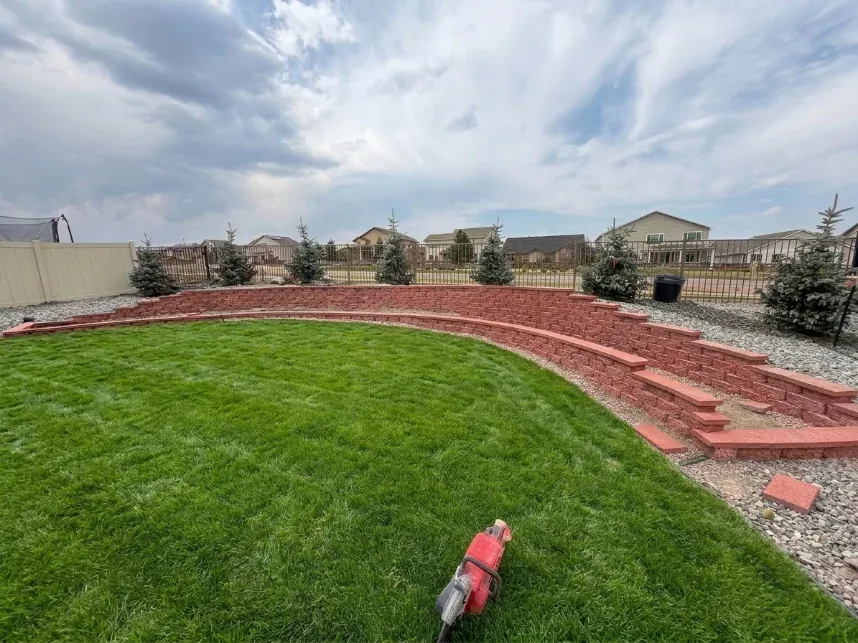
Walls fail from behind.
A retaining wall holds back soil, and soil holds water. When a wall leans, bulges or cracks, the cause is usually water pressure building up behind it, or a wall sitting on ground that moved. A good-looking wall is easy. A wall that's still straight after years of snowmelt and summer storms comes down to the footing and the drainage.
Every wall we build starts on a compacted gravel footing, with drain rock behind it and a perforated pipe to give water a way out. Use a wall to turn a slope into level ground, hold back a hillside, build raised planting beds, or frame a lawn or patio.
Walls usually come with other work: a new paver patio on the flat ground they create, or rock and plantings on the tiers. We quote it all together.
What's included
- Layout and excavation along the wall line
- Compacted gravel footing
- First course set level on the footing
- Drain rock backfill behind the wall
- Perforated drain pipe to carry water away
- Block or stone courses built up and capped
- Backfill, grading and cleanup
- Rock, plantings or turf on the tiers if you want them
Footing, drainage, then block.
- Excavate the wall lineWe dig out along the wall and set the grade for the footing.
- Build the gravel footingA compacted gravel footing gives the wall a firm, level start.
- Drain rock and pipeDrain rock goes in behind the wall with a perforated pipe, so water drains out instead of pushing on the wall.
- Build up and capCourses go up level and tight, then caps, backfill and the finish on top.
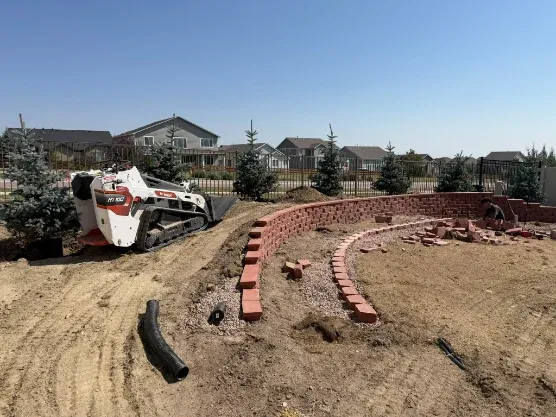
1. Excavate along the wall line and cut the slope back.
Illustration, not to scale.Why retaining walls fail.
When a wall leans, bulges or falls over, water pressure behind it is usually the cause. Here's how it happens, next to a wall built with drainage.
Install day: blocks set on soil, backfilled with clay, no drainage.
Install day: gravel footing, drain rock and a perforated pipe behind the wall.
- ProblemWater pressure
Wet soil is heavy. With no way out, water builds up behind the wall and pushes on it.
Our fix: drain rock and a perforated pipe behind every wall. - ProblemBulging and leaning
That pressure, plus freeze-thaw, shifts the blocks a little more every season.
Our fix: drainage that keeps the soil behind the wall from staying saturated. - ProblemSettling and tipping
Blocks set straight on soil can sink or rotate at the base.
Our fix: a compacted gravel footing with the first course set level.
Walls that fit the slope.
We'll look at the slope, the soil and what you want on top, then recommend a wall type during the free consultation.
Block walls
Retaining wall block in a range of colors and textures, with a clean, consistent look.
Natural stone
Stone walls for a more natural look that blends into rock beds and plantings.
Tiered & terraced beds
Two or more shorter walls that step up a slope and turn it into planting beds.
Curved walls
Walls that follow a curve around a lawn, patio or tree.
Finish on top
Rock, plantings, sod or turf on the level ground the wall creates.
Drainage tie-ins
Drain pipe routed to carry water away from the wall and the house.
Every yard is quoted on its own.
Wall prices depend most on length, height and how hard the site is to work. Your quote is free, itemized and written for your yard, so you see exactly what you're paying for before you sign.
- Length and heightHow long the wall runs and how tall it needs to be.
- AccessWhether equipment can reach the wall line.
- ExcavationHow much soil has to be dug out and moved or hauled away.
- Block or stoneThe wall material you choose.
- Tiers and curvesMultiple tiers, curves, corners and steps add time.
- DrainageHow far the drain pipe has to run.
- FinishRock, plants or turf on top of the wall.
Walls, before and after.
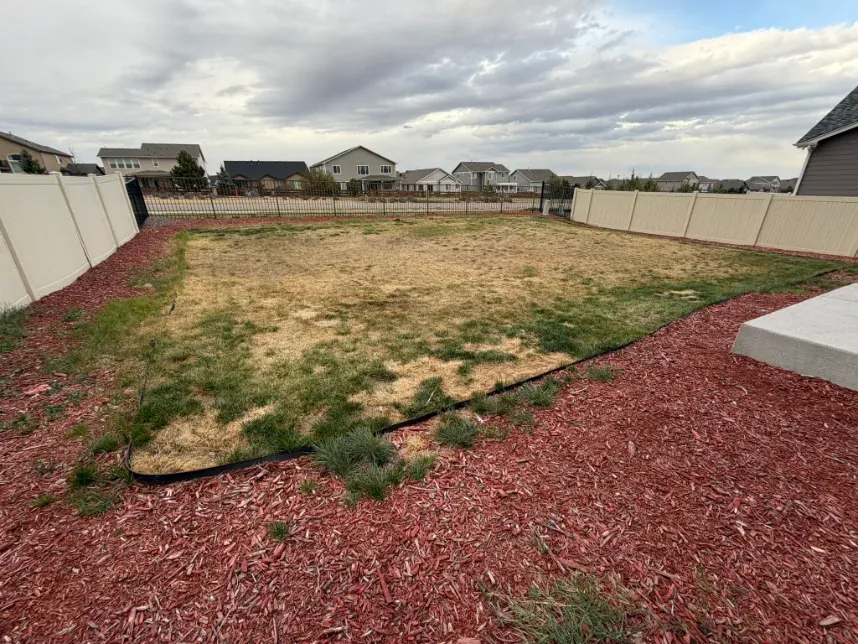
Every photo is a Lawn Gladiator project in the Colorado Springs area. Drag the sliders to compare.
BEFOREAFTER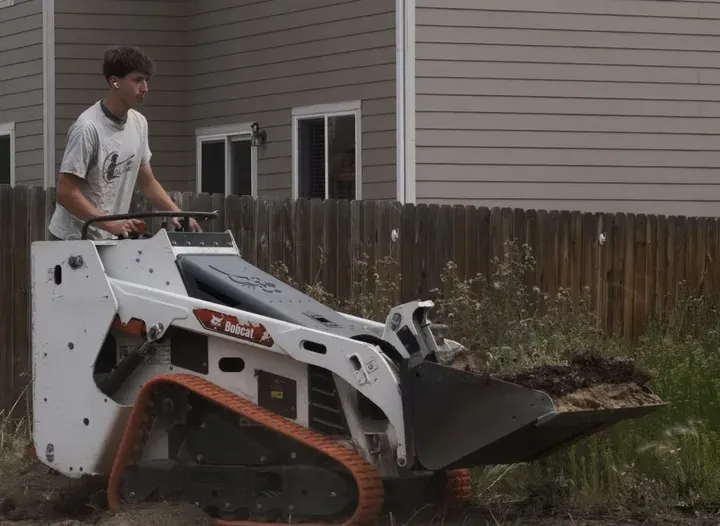
Five steps, no surprises.
From the first visit to the final walkthrough, you know what's happening and what it costs.
Free consultation
We come out, look at the yard, measure, and talk through what you want and how you use the space.
Itemized quote
You get a written quote with every line spelled out: tear-out, base, materials, borders and labor. Review and sign it online.
Pick your materials
We bring samples and help you choose products, colors and borders that fit the yard and the budget.
Install
Our crew does the work from tear-out to cleanup, with the base built and compacted the same way on every job.
Final walkthrough
We walk the finished project with you, go over care, and make sure you're happy before we call it done.
Why does drainage behind a wall matter?
Wet soil is heavy. Without a way out, water builds up behind the wall and pushes on it, especially when it freezes. Drain rock and a perforated pipe behind the wall let that water escape, which is what keeps a wall from leaning or bulging over time.
Block or natural stone?
Block gives a clean, consistent look and comes in many colors and textures. Natural stone looks more organic and blends into rock beds and plantings. Both are built on the same footing and drainage. We'll bring options to the consultation.
Can you terrace a steep slope?
Yes. Instead of one tall wall, a slope can be stepped with two or more shorter walls, creating level beds for plants, rock or turf. It's often easier on the eye and on the budget.
Do I need a permit for a retaining wall?
It depends on the wall. Height and what sits above or near it, like a driveway, a building or more slope, can change the requirements. Permits in our area go through Pikes Peak Regional Building Department. We'll go over what applies to your wall during the quote.
Why do retaining walls fail?
The common causes are no drainage behind the wall, a footing that wasn't compacted, or a wall built too tall for its design. Each one lets the wall shift a little every season until it leans, bulges or cracks.
How long does a wall take to build?
It depends on the length, height, access and weather. Your quote includes an estimated schedule before you sign.
Often built together.
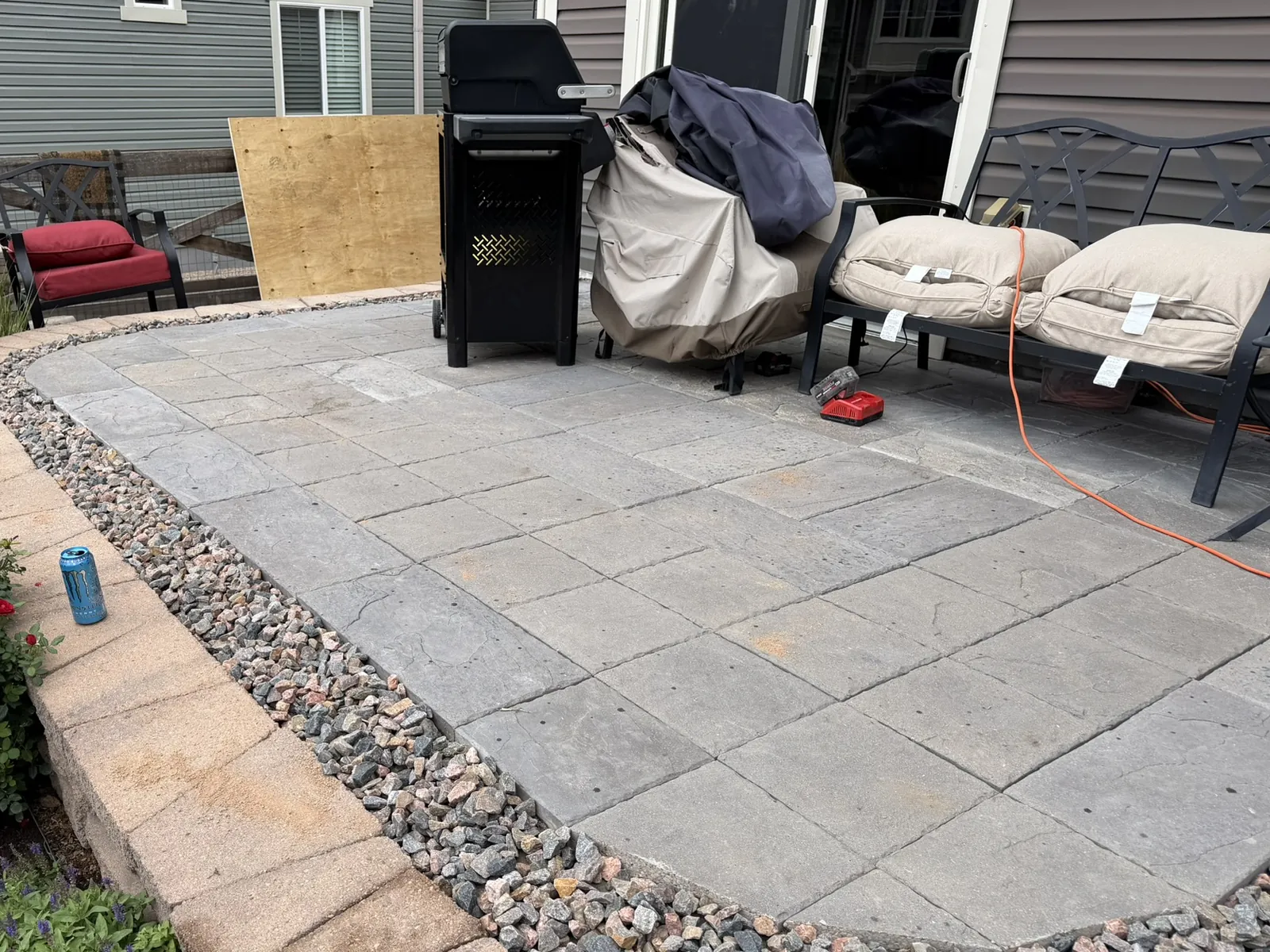 Paver patios & walkwaysBuilt on a base that won't sink or heave.
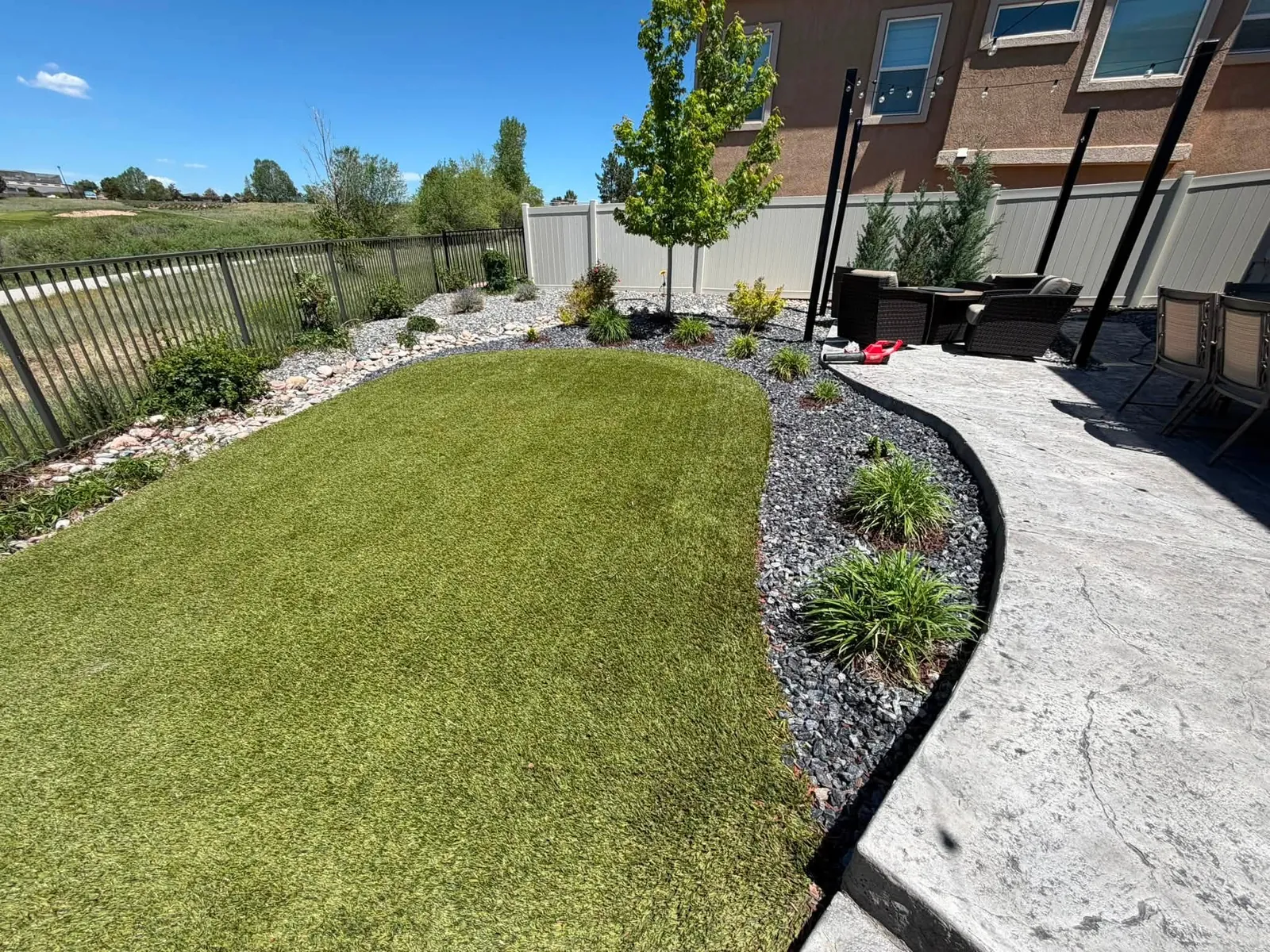 Landscaping & xeriscapeRock, edging, sod, trees and full-yard rebuilds.
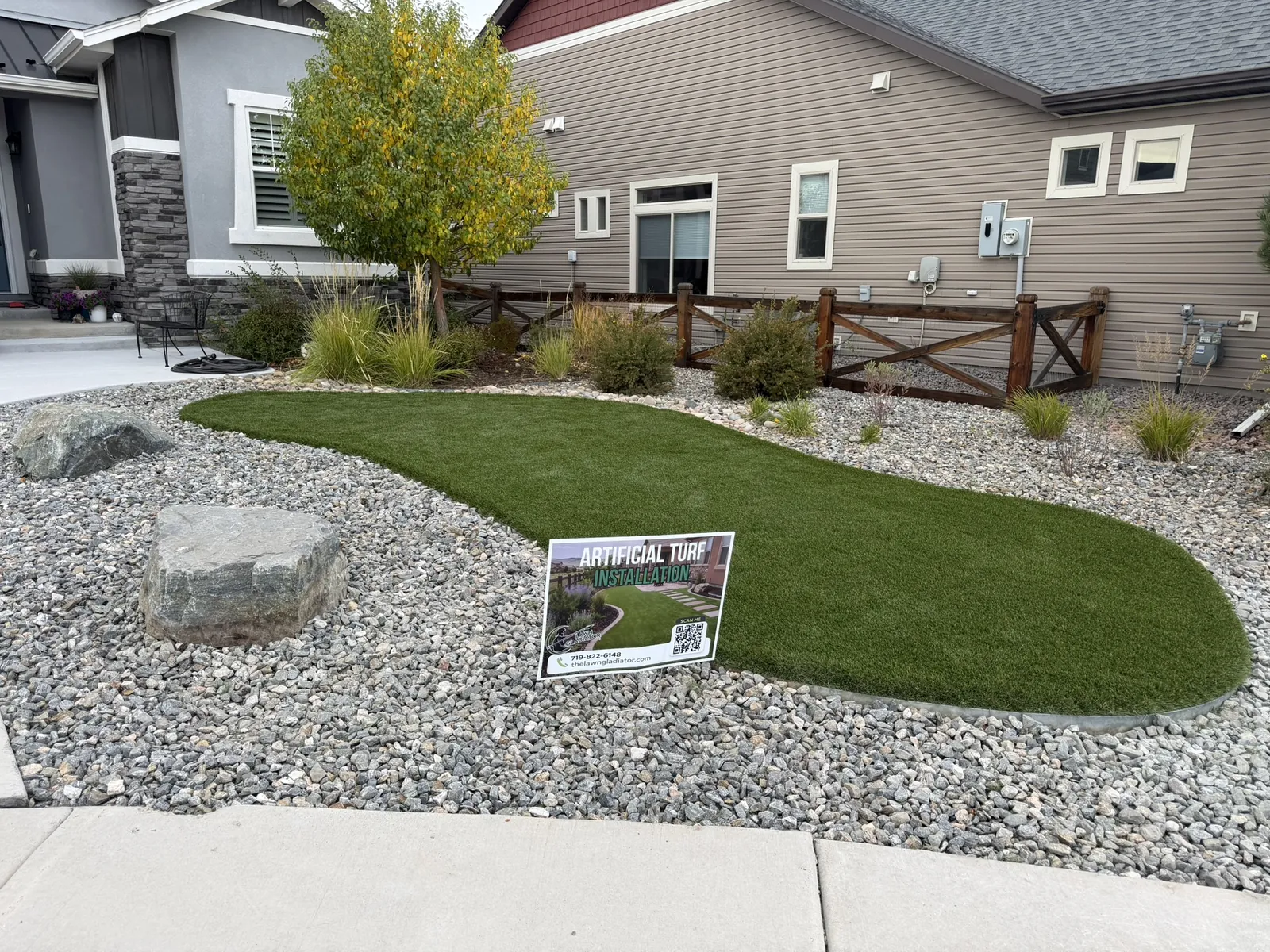 Artificial turfLawns that stay flat, green and drained.
Service area
We build retaining walls across the Pikes Peak region: Colorado Springs, Monument, Falcon, Fountain, Peyton, Black Forest, Manitou Springs and Woodland Park. Not sure we cover your street? Call or text (719) 822-6148.
Let's level out that slope.
Tell us about the yard. We'll follow up within one business day to set up a free visit and measure.
Rather talk? Call or text (719) 822-6148, Mon–Sat, 8am–6pm.
Thanks, we got it.
We'll reach out within one business day to set up your free quote. For anything urgent, call (719) 822-6148.