
Paver patios and walkways in Colorado Springs
Patios and walkways built on a deep, compacted base so they stay level through freeze-thaw winters. We also lift and reset patios that have sunk.
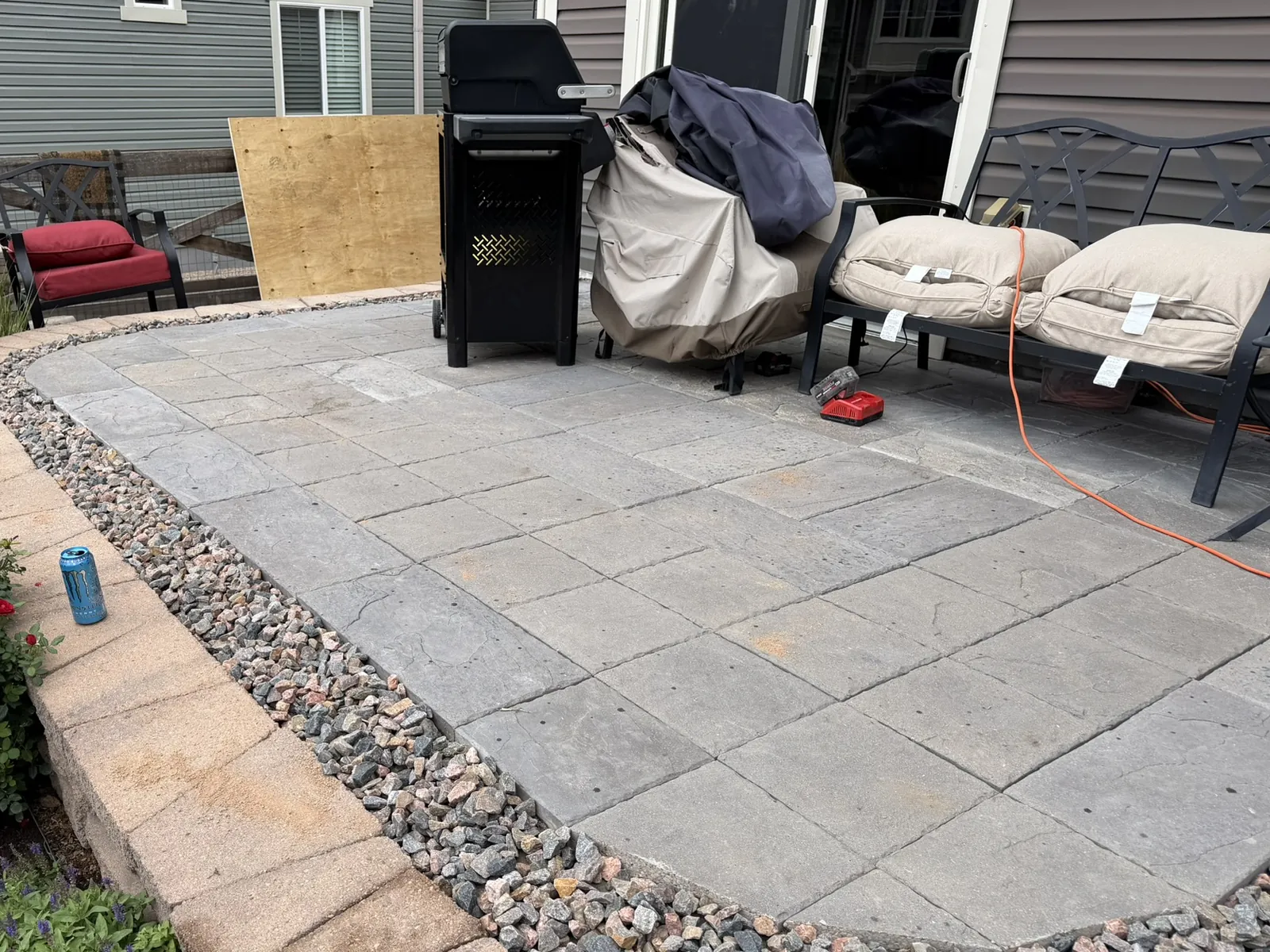
Pavers don't sink. Bad bases do.
When a paver patio sinks, spreads or grows a low spot, the pavers almost never caused it. The base underneath wasn't deep enough, wasn't compacted, or had nothing holding the edges in. Water gets in, the ground freezes and thaws, and the patio moves.
We build patios and walkways base first. Every job gets 6–8 inches of crushed road base compacted in lifts, a 1-inch sand setting bed, edge restraint around the perimeter, and polymeric sand in the joints. It's the same approach whether we're building a new patio or re-leveling an old one.
That means a patio you can put a table and grill on and stop thinking about. Pair it with artificial turf or a retaining wall and the whole backyard comes together.
What's included
- Layout and excavation
- Removal and haul-off of soil, sod or old pavers
- 6–8 inches of crushed road base, compacted in lifts
- Grading so water runs away from the house
- 1-inch sand setting bed, screeded level
- Pavers laid in your pattern, with cuts at curves and edges
- Edge restraint around the perimeter
- Polymeric sand swept into the joints and set
Base first, pavers last.
- Excavate and gradeWe dig out to depth, haul away the spoils, and set the grade so water drains away from the house.
- Build the base in lifts6–8 inches of crushed road base goes in layer by layer, and each lift is compacted before the next.
- Screed the sand bedA 1-inch sand setting bed is screeded level so every paver sits flat.
- Lay, restrain and lockPavers go down tight, edge restraint holds the perimeter, and polymeric sand locks the joints.
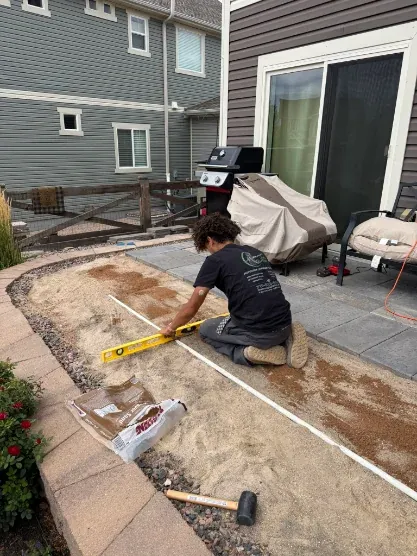
1. Dig out to depth and haul away the old lawn and soil.
Illustration, not to scale.Why some paver patios fail.
Sinking, heaving and spreading all start underneath the pavers. Watch a thin-base patio go through a winter next to one built on a deep, compacted base.
Install day: thin base and no edge restraint. Looks fine.
Install day: 6–8 inches of compacted road base, 1 inch of sand, edge restraint.
- ProblemSinking and low spots
A base that's too thin or never compacted settles under the weight.
Our fix: 6–8 inches of road base, compacted in lifts. - ProblemFrost heave
Water trapped under the patio freezes, expands and pushes pavers up, then lets them drop when it thaws.
Our fix: a deep, free-draining base and a grade that sheds water. - ProblemSpreading edges and open joints
Without edge restraint, the outer pavers creep outward and joints open up for weeds.
Our fix: edge restraint around the perimeter and polymeric sand in the joints.
New patios, paths and repairs.
We bring paver samples to the consultation so you can pick a style and color in your own yard.
New patios
Patios for a table, grill or fire pit, sized and shaped around how you use the yard.
Walkways & paths
Front walks, side paths and stepping routes that tie the yard together.
Re-leveling
Sunken or spreading patios lifted, the base rebuilt and compacted, and the pavers reset tight.
Patterns & colors
Different paver styles, colors and laying patterns, with cut borders around curves.
Rock & borders
Rock or plantings along the edge to finish the patio and keep water moving.
Turf & landscaping
Combine the patio with turf, rock beds or a wall. Landscaping →
Every yard is quoted on its own.
Patio prices swing a lot with size, access and what has to come out first. Your quote is free, itemized and written for your yard, so you see exactly what you're paying for before you sign.
- AreaSquare footage of the patio or walkway.
- Tear-outSod, soil, concrete or old pavers that have to be removed and hauled off.
- AccessWhether equipment can reach the backyard, and how far material has to travel.
- Soil and baseHow much excavation and road base the site needs.
- Paver styleThe paver you choose and the laying pattern.
- Curves and cutsCurved edges, steps and detailed cuts take more time.
- Re-useOn re-leveling jobs, how many existing pavers can go back down.
Patios, before and after.
Every photo is a Lawn Gladiator project in the Colorado Springs area. Drag the sliders to compare.
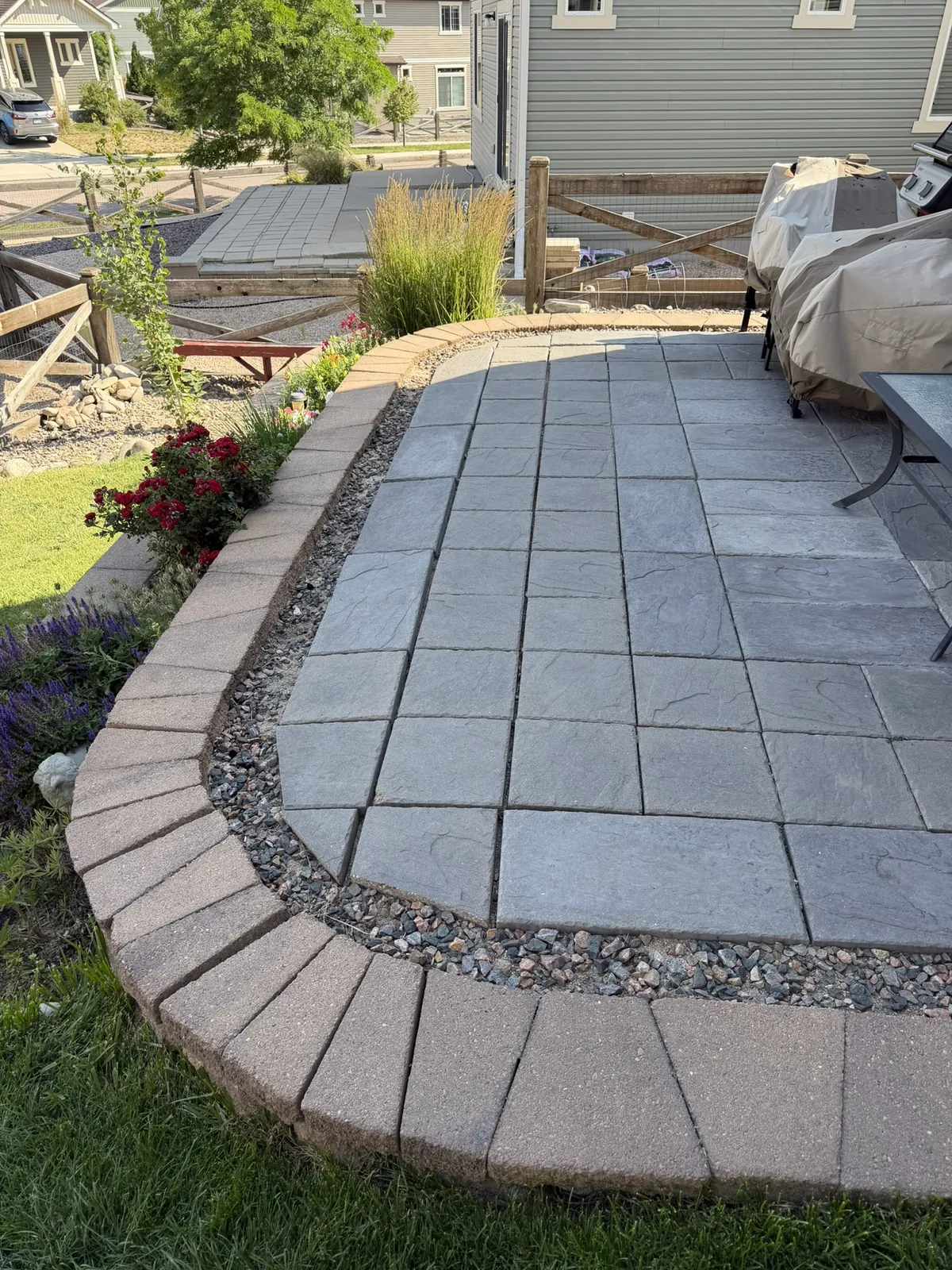 BEFOREAFTER
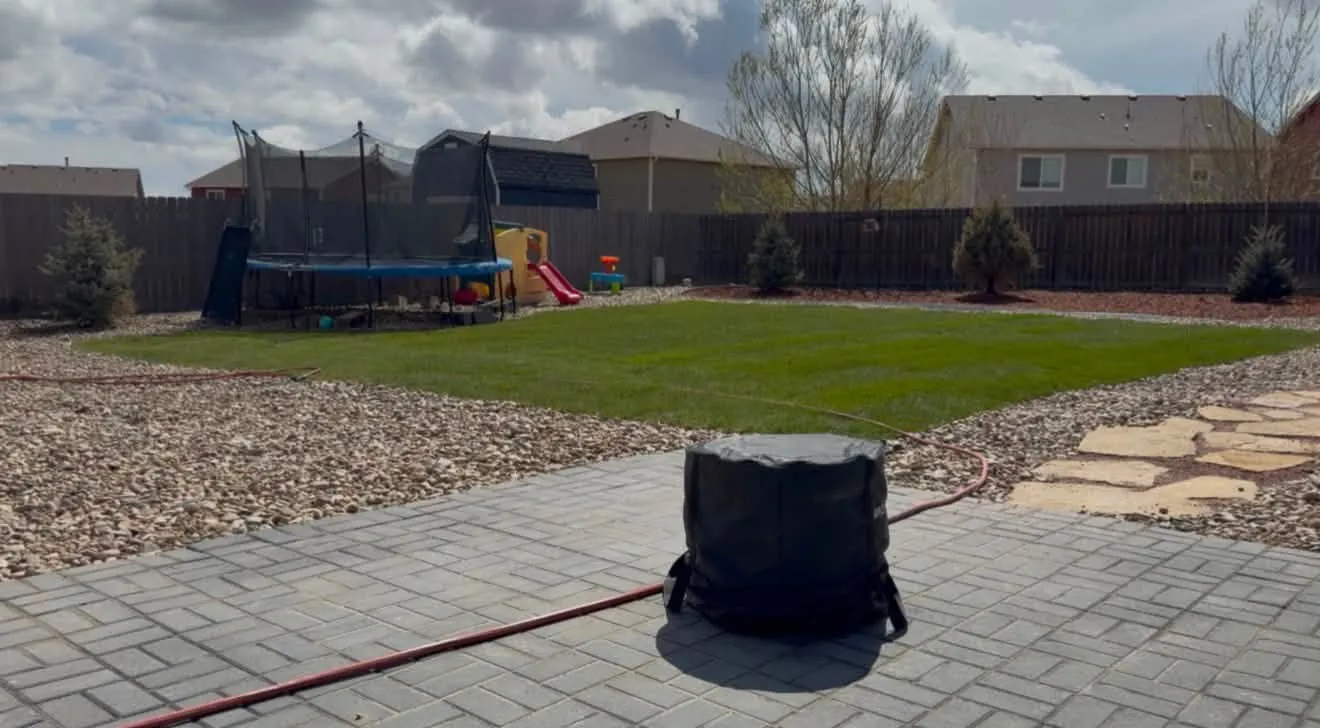
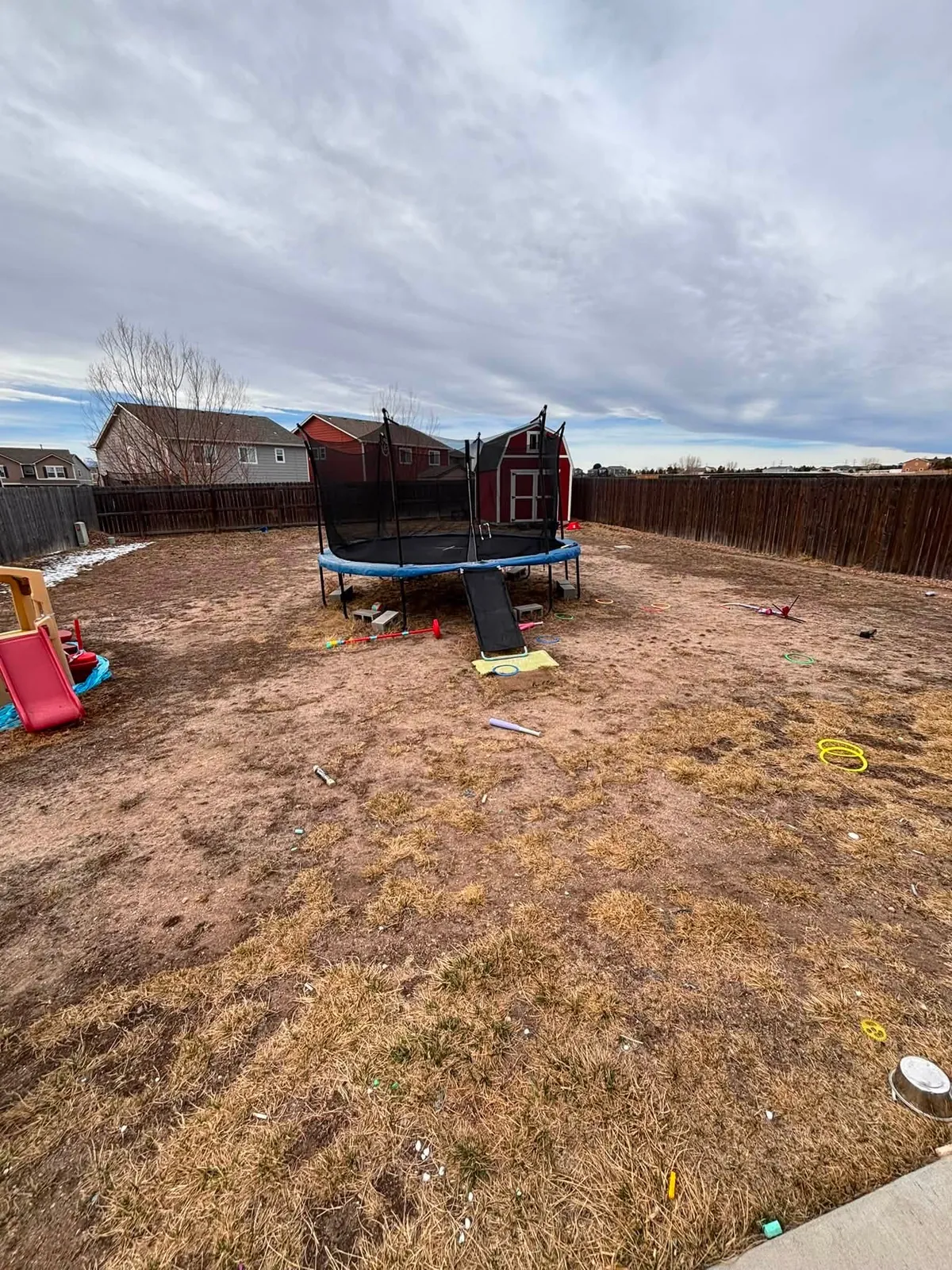 BEFOREAFTER
Five steps, no surprises.
From the first visit to the final walkthrough, you know what's happening and what it costs.
Free consultation
We come out, look at the yard, measure, and talk through what you want and how you use the space.
Itemized quote
You get a written quote with every line spelled out: tear-out, base, materials, borders and labor. Review and sign it online.
Pick your materials
We bring samples and help you choose products, colors and borders that fit the yard and the budget.
Install
Our crew does the work from tear-out to cleanup, with the base built and compacted the same way on every job.
Final walkthrough
We walk the finished project with you, go over care, and make sure you're happy before we call it done.
Why do paver patios sink?
Almost always because of the base. A thin layer of base, base that was never compacted, or no edge restraint lets the pavers settle and spread. Water that soaks in and freezes makes it worse. We build on 6–8 inches of compacted road base with edge restraint to prevent it.
What about frost heave?
Water in the ground expands when it freezes and can push a patio up, then let it drop when it thaws. A deep, compacted, free-draining base and a grade that moves water away from the patio reduce how much it can move. That's why we don't skimp on base depth.
Should I choose pavers or concrete?
Both can work. Concrete is one slab, and when it cracks the crack stays. Pavers are individual pieces that flex with the ground, and a damaged or stained paver can be pulled and replaced. Many homeowners also like the look and color options of pavers. We'll talk through both during your quote.
Can you re-level my existing patio?
Often, yes. We lift the pavers, rebuild and compact the base, and reset them tight with new joint sand. Pavers in good shape can usually go back down. We'll tell you during the quote if any need replacing.
Do pavers need to be sealed?
Sealing is optional. It can bring out the color and make stains easier to clean, but the patio doesn't need it to hold up. Ask during your quote and we'll go over whether it makes sense for your pavers.
How long does a patio take?
It depends on the size, the access, how much has to come out first, and the weather. Your quote includes an estimated schedule before you sign anything.
Often built together.
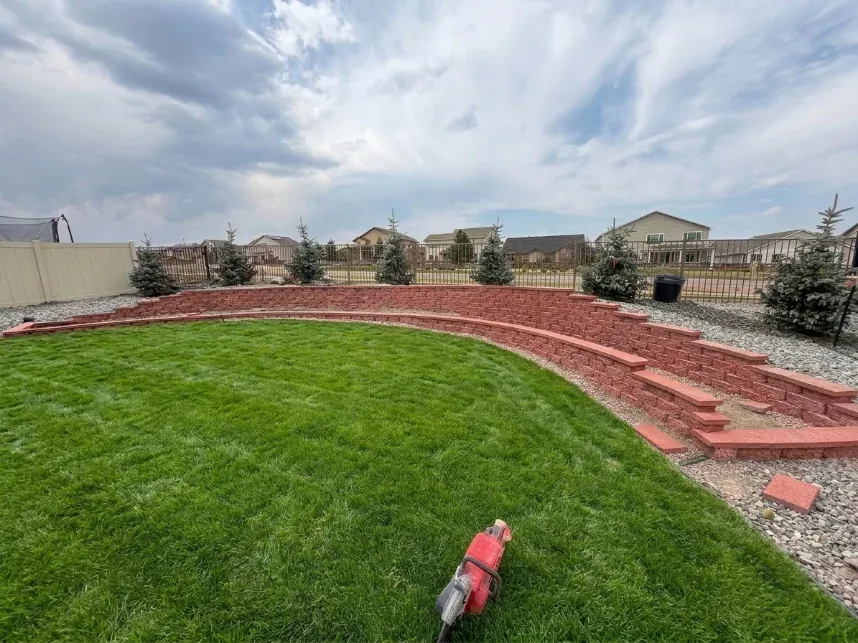 Retaining wallsBlock and stone walls with drainage behind them.
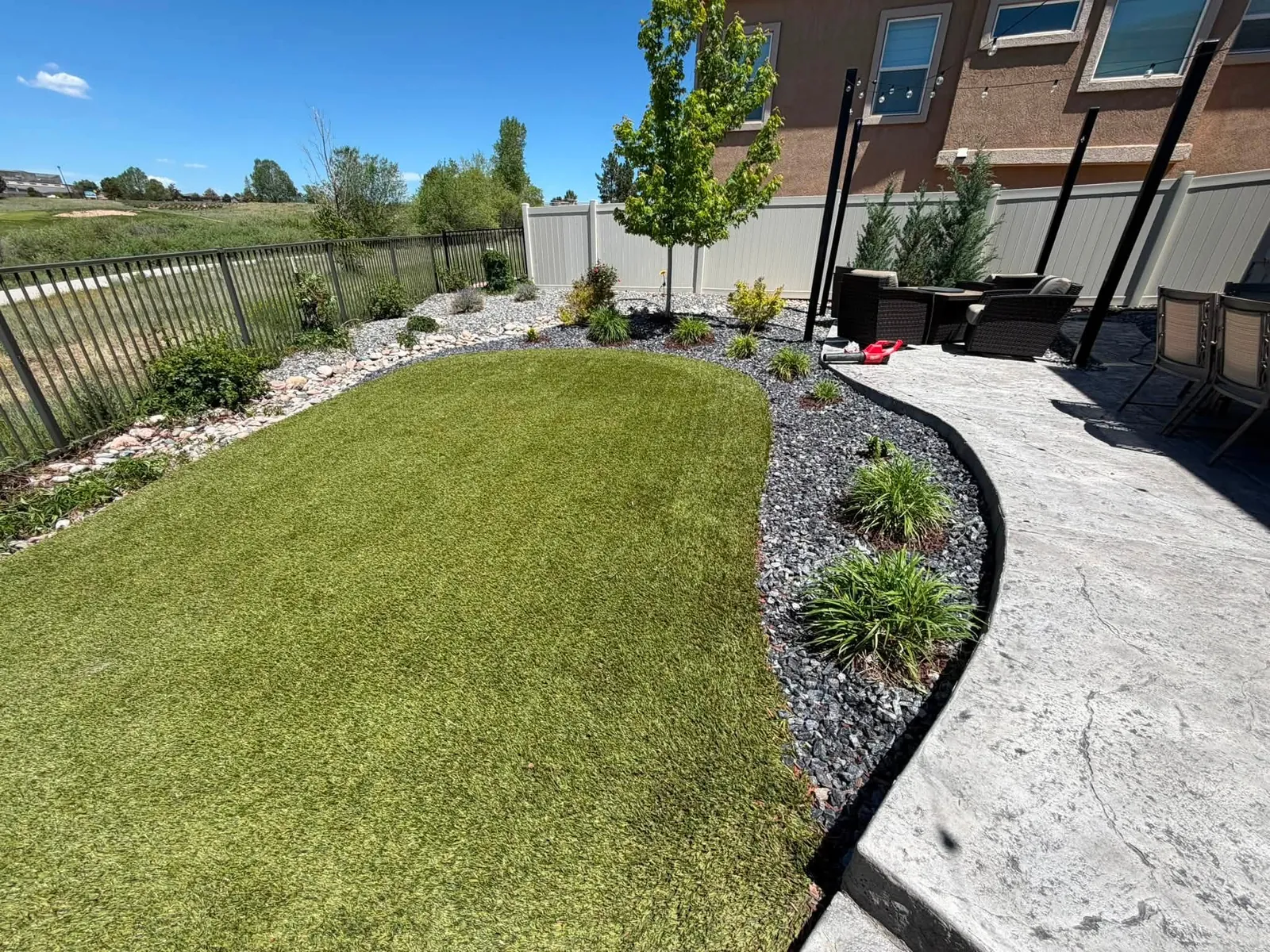 Landscaping & xeriscapeRock, edging, sod, trees and full-yard rebuilds.
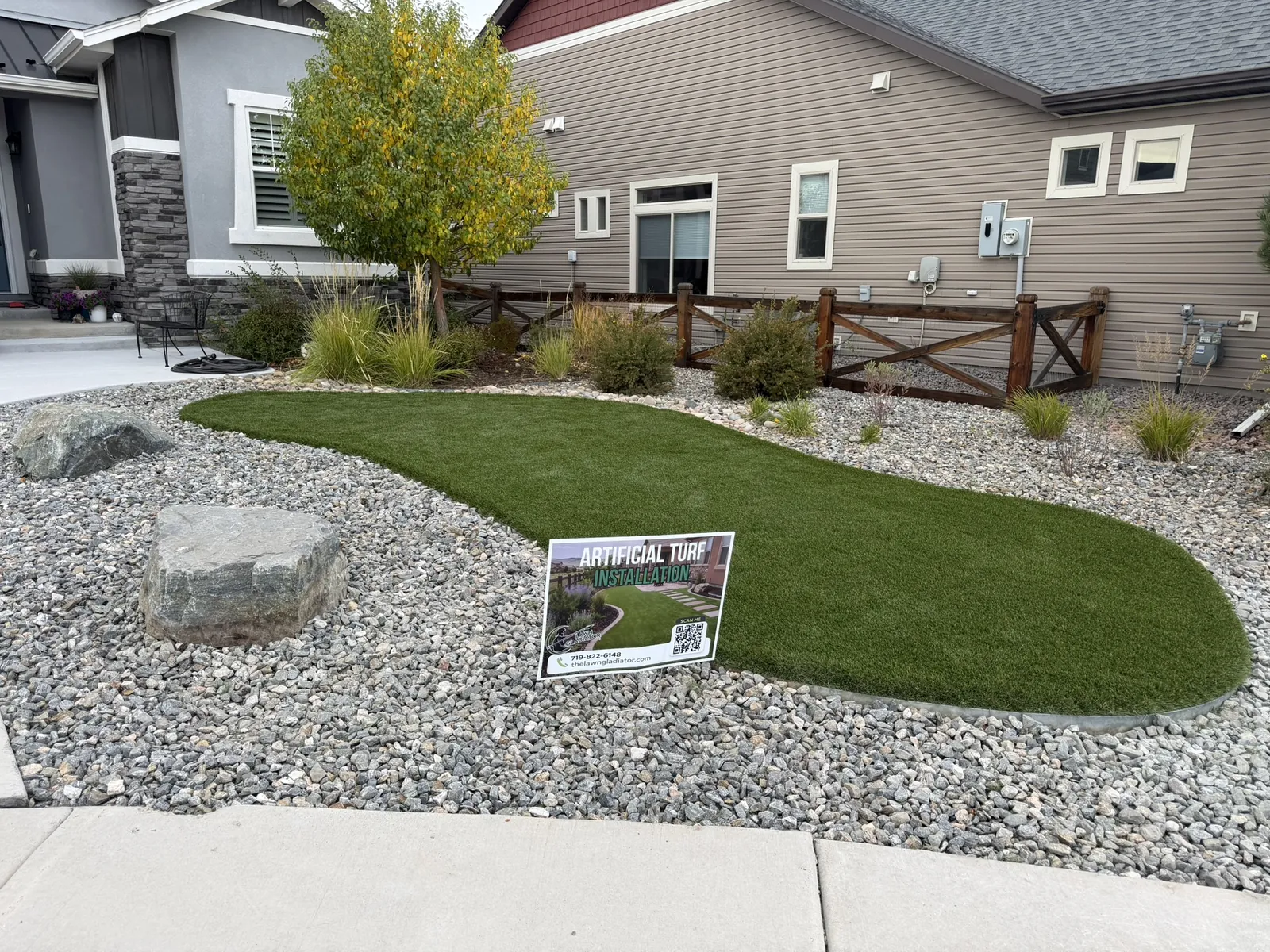 Artificial turfLawns that stay flat, green and drained.
Service area
We build paver patios and walkways across the Pikes Peak region: Colorado Springs, Monument, Falcon, Fountain, Peyton, Black Forest, Manitou Springs and Woodland Park. Not sure we cover your street? Call or text (719) 822-6148.
Let's build your patio.
Tell us about the yard. We'll follow up within one business day to set up a free visit and measure.
Rather talk? Call or text (719) 822-6148, Mon–Sat, 8am–6pm.
Thanks, we got it.
We'll reach out within one business day to set up your free quote. For anything urgent, call (719) 822-6148.