
New sod usually browns because it isn't getting water into the soil, or its roots can't get into the soil. The common causes are sprinklers that miss strips, seams and edges drying out, hard compacted ground under the sod, summer heat and wind, or overwatering in low spots. Lift a corner: dry soil means water, no new white roots after two weeks means soil contact or compaction.
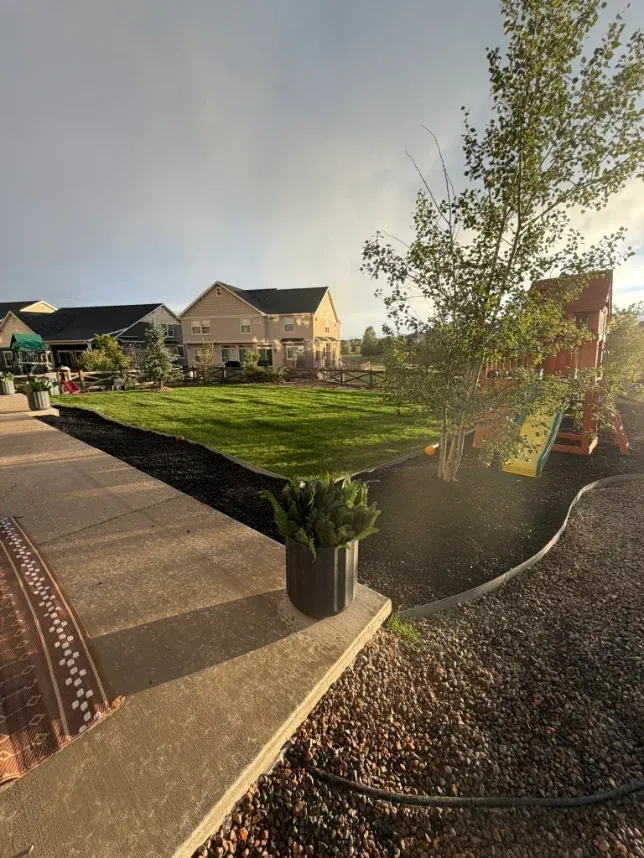
Check these first
- Brown strips or arcs: sprinkler coverage gaps. Watch the system run and look for heads that are blocked, tilted or missing.
- Brown edges and seams: those dry out first, especially along hot sidewalks and driveways. Hand-water them.
- Brown everywhere, dry underneath: not enough water for the heat. Follow the establishment schedule.
- Brown and spongy in low spots: too much water or poor drainage.
When the problem is underneath
Sod laid on hard, compacted soil can't root. Water runs off instead of soaking in, and the roots stay in the thin soil layer that came with the sod. If you can lift a piece easily after two or three weeks and see no new white roots going down, that's what's happening.
Install day: sod laid on hard, unprepared ground. Looks green.
Install day: graded, soil loosened, sprinklers set for full coverage.
What can be saved
Sod that's tan but still flexible, with green at the base of the blades, often comes back with steady water. Sod that's crispy and pulls apart in your hand is usually gone and needs to be replaced. Fix the cause first, or the new pieces will brown too.
How we prevent it
We loosen and prep the soil, grade it so water drains evenly, set sprinkler coverage before any sod goes down, and lay the pieces tight with staggered seams, then roll them for full soil contact. See sod installation.
Questions
Will brown sod come back?
If it's still flexible and green at the base, often yes, with steady water. Crispy sod that tears apart usually needs replacing.
Why are the seams of my new sod brown?
Seams and edges dry out first. Hand-water them, and make sure pieces were laid tight.
Can you overwater new sod?
Yes. Low spots that stay soggy can brown too. Lift a corner to check.
Can you replace dead sections?
Yes. We fix the cause, like coverage or compaction, then patch with fresh sod.
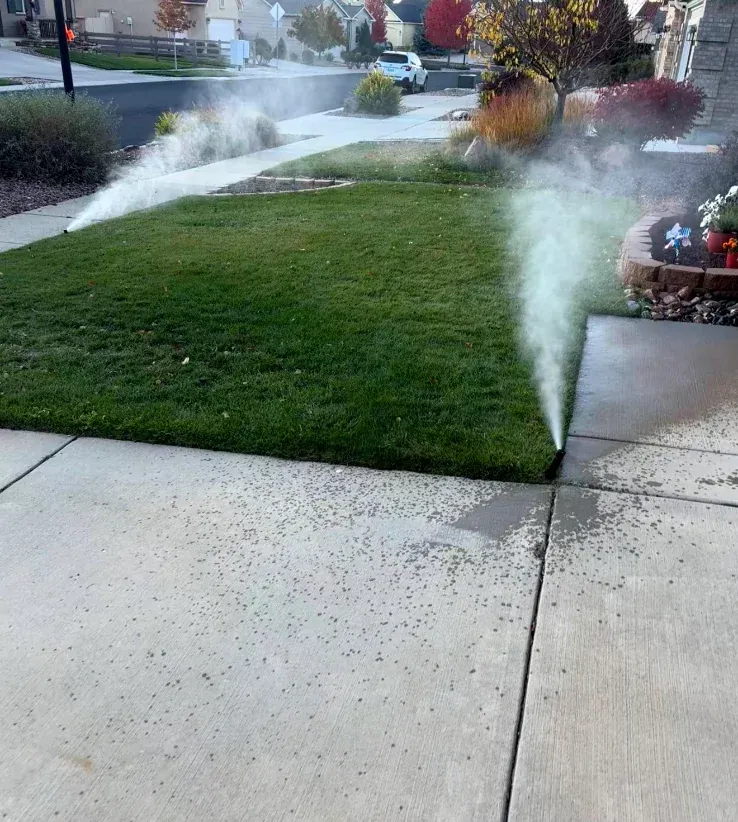 Watering new sod