
Infill is the granular material brushed down between turf fibers. It weighs the turf down, helps blades stand up, protects the backing from sun, and makes the lawn feel more natural underfoot. Most residential lawns use a sand-based infill. Pet areas often get an infill made to help control odor, and some infills are made to run a little cooler in the sun.
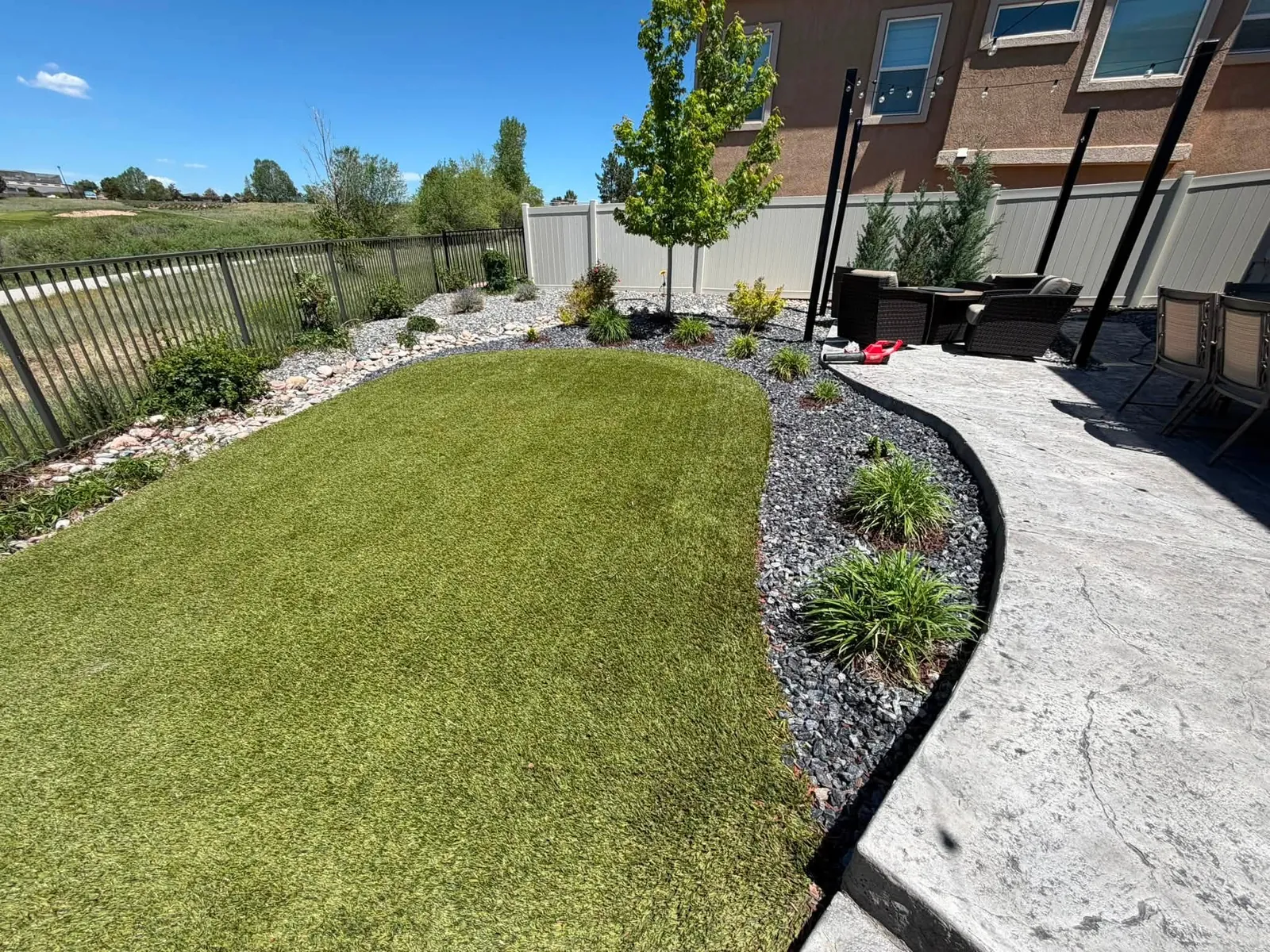
What infill does
- Ballast: it weighs the turf down so it lies flat and stays put.
- Support: it holds the fibers upright so the lawn looks fuller and recovers after foot traffic.
- Protection: it shields the backing from UV, which matters in Colorado's strong sun.
- Feel: it gives the turf a firmer, more natural feel underfoot.
Common types
- Sand-based infill: the standard for most residential lawns. Heavy, stable and affordable.
- Coated sand: sand with a coating that resists bacteria and dust, often used in pet areas.
- Odor-control infill for pets: made to help absorb and break down urine odor in dog areas.
- Cooling infill: made to hold moisture or reflect heat so the surface runs a bit cooler. It helps, but shade helps more.
Choosing infill
We match infill to the turf product and how you'll use the area. Front lawns usually get a standard sand infill. Dog runs get an odor-control infill. If you're worried about heat, we'll talk through cooling options and shade. See does turf get hot.
Upkeep
Infill settles and shifts over time, mostly in high-traffic spots. Brushing keeps it spread evenly. Top it up when you can see more backing than usual.
Questions
Does artificial turf need infill?
Most landscape turf does. It holds the turf down, keeps fibers upright and protects the backing.
What's the best infill for dogs?
An infill made for pets that helps control odor, paired with a turf and base that drain well.
Does infill get on shoes?
A little can track at first or after topping up. It settles in as the turf is used.
How often do you add infill?
Only when it thins out, usually in the spots that see the most traffic.
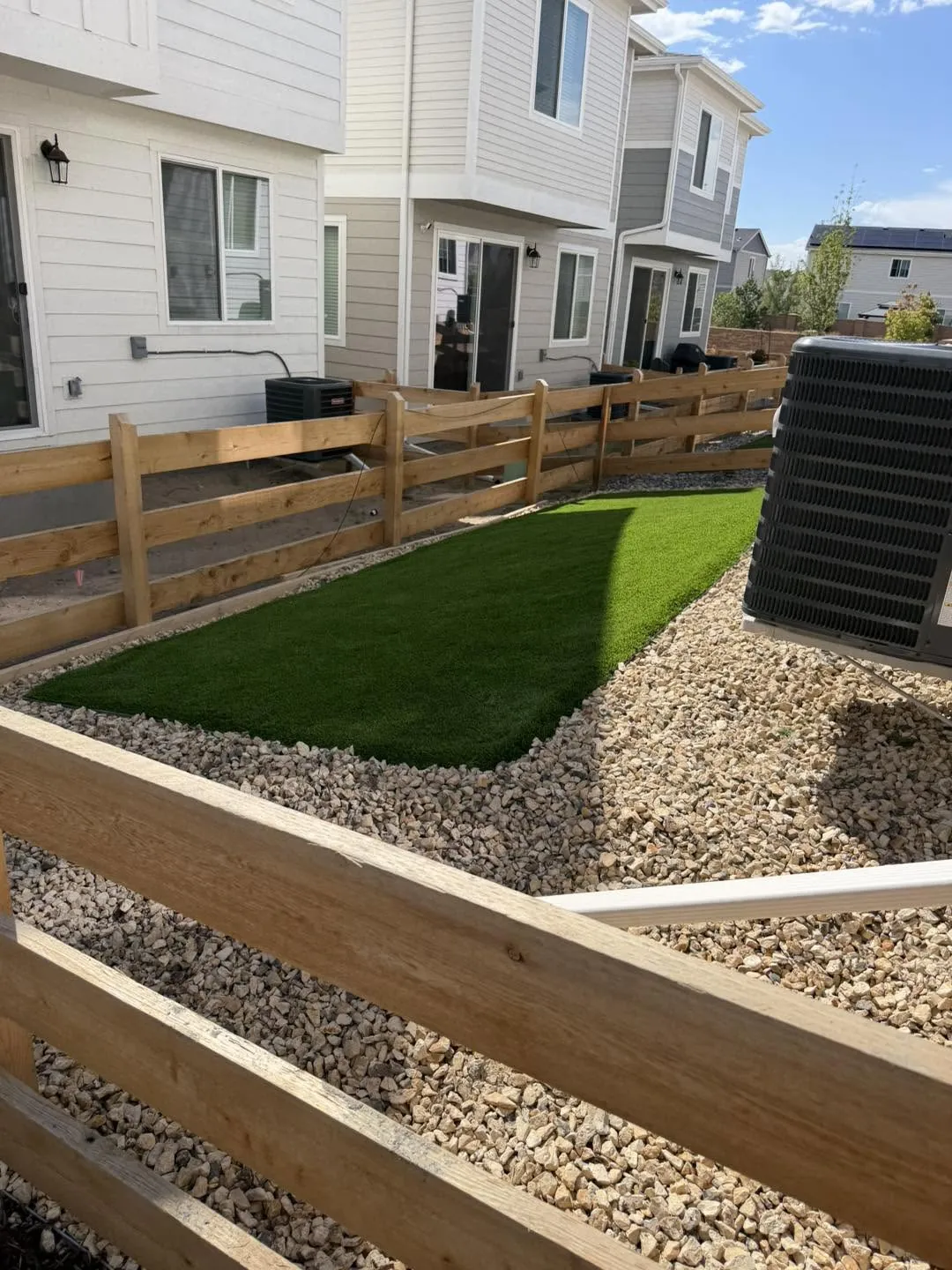 Pet turf smell
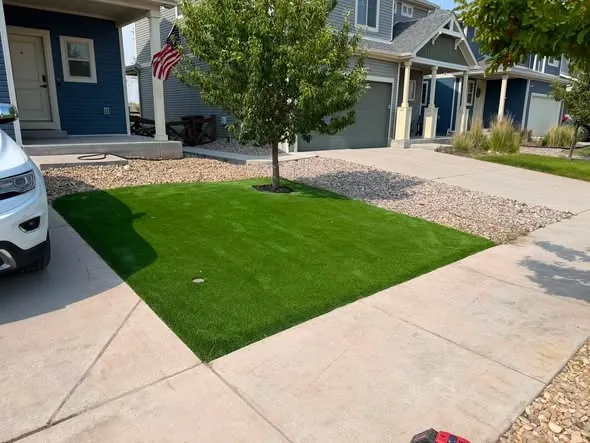 Choosing turf
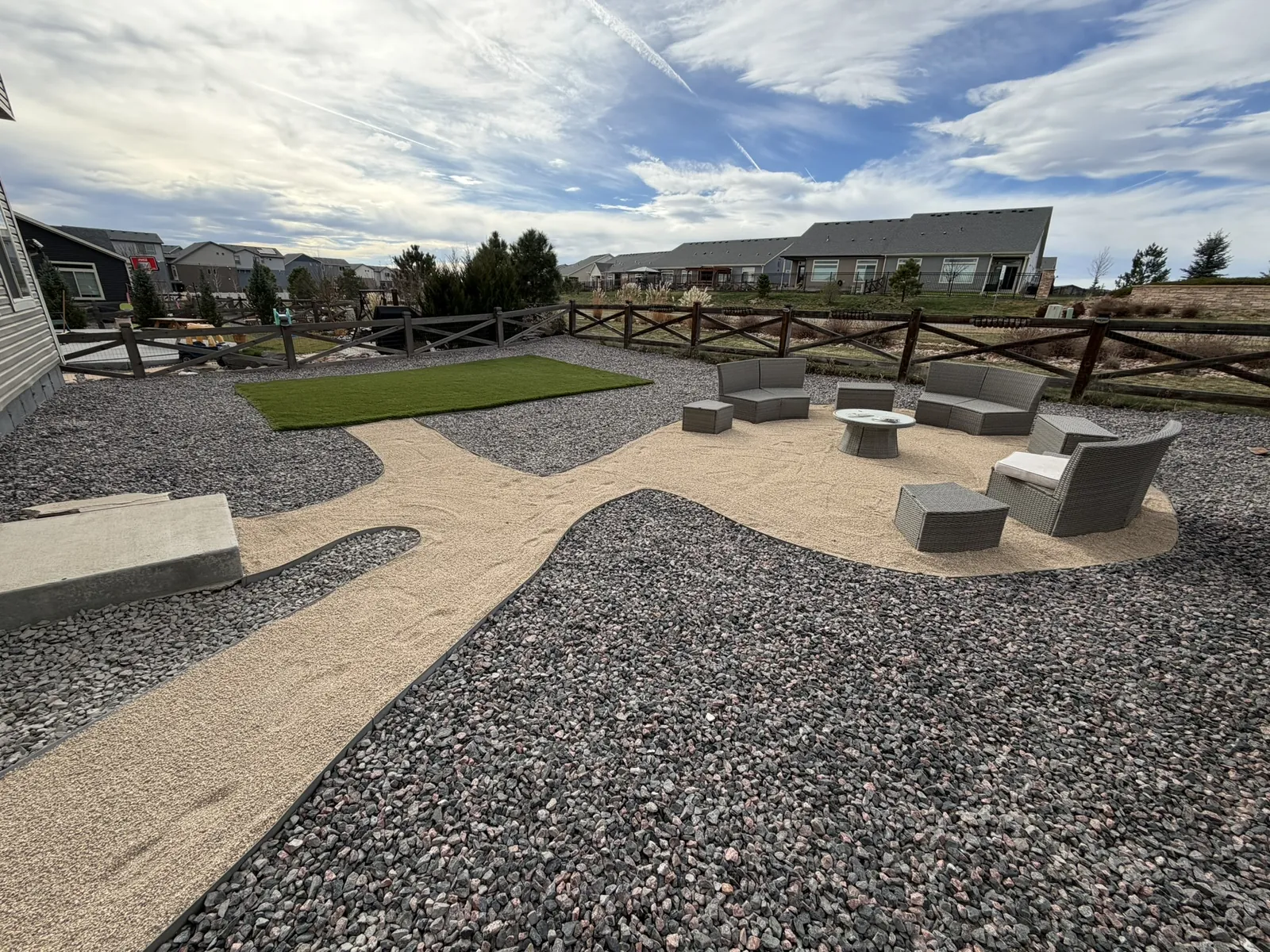 Turf and heat