
Paver upkeep is mostly about the joints. Keep them full with polymeric sand so pavers stay locked and weeds and ants can't move in, sweep and rinse the surface now and then, and fix a low spot before it spreads. Sealing is optional and mostly about color and stain resistance. In winter, use a plastic shovel blade and go easy on ice melt.
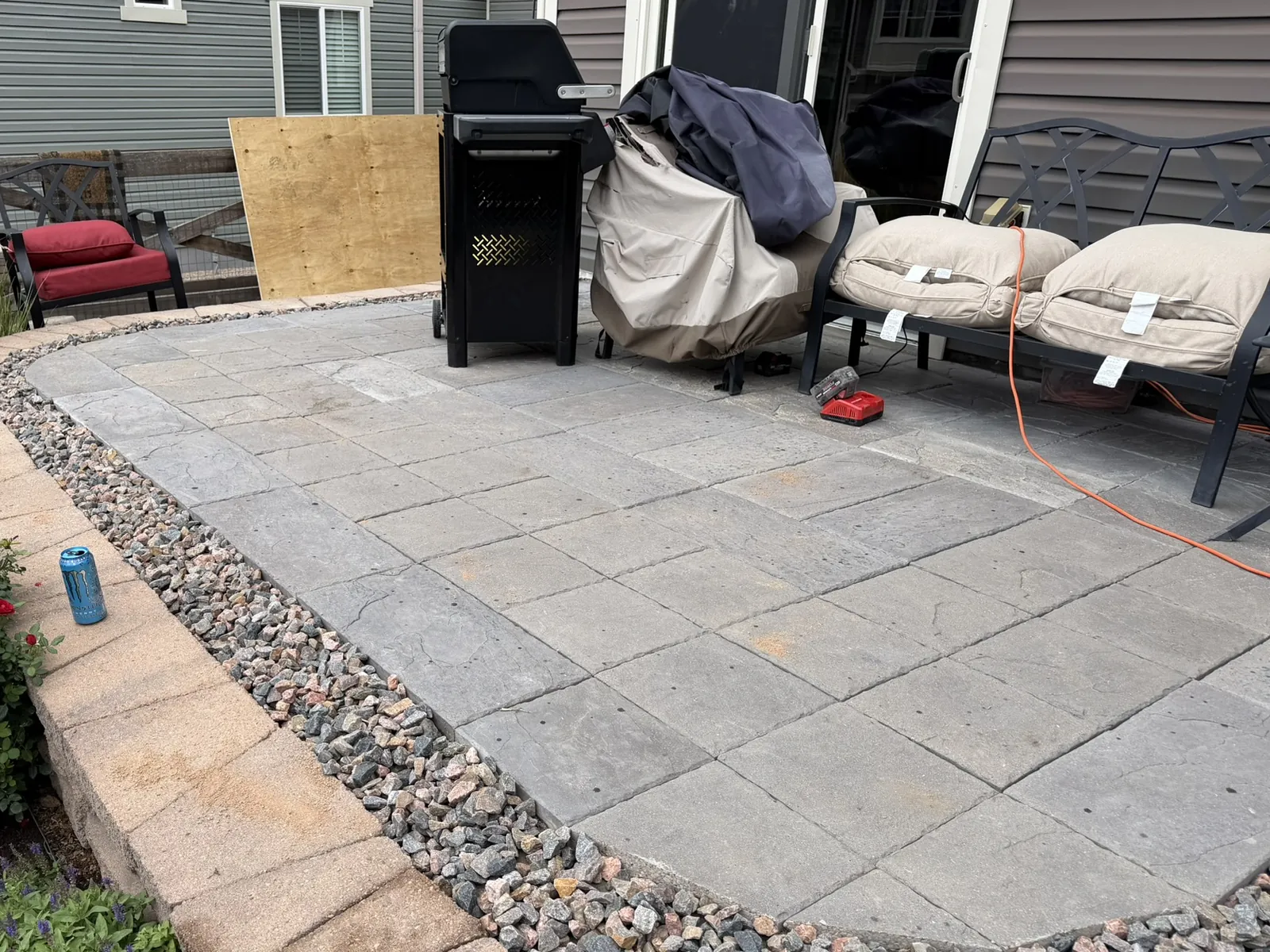
Keep the joints full
Polymeric sand hardens when it gets wet and locks the pavers together. Over years, especially where water runs across the patio, some washes out. When joints look low, sweep out loose debris and re-sand. Full joints are the best defense against weeds, ants and shifting.
Weeds and ants
Weeds and ants move into empty joints. Pull weeds, then re-sand those joints. If weeds keep coming back in one area, water may be washing the sand out there, so check your downspouts and the patio's slope.
Cleaning
- Sweep regularly and rinse with a hose.
- Clean grease and food spills with a mild detergent and a brush.
- If you pressure wash, keep the pressure moderate and the nozzle back, and re-sand afterward.
Sealing
Sealing can deepen color and help resist stains. It isn't required for the patio to last. If you seal, make sure the joints are full and the surface is clean and dry first.
Winter
- Use a plastic or rubber-edged shovel to avoid chipping.
- Use ice melt sparingly. Rinse residue in spring.
- Keep downspouts discharging away from the patio, so meltwater doesn't refreeze on it.
When to call us
If a section is sinking, rocking or heaving, the base underneath needs attention. We lift the pavers, fix the base and reset them. See why pavers sink.
Questions
How often should I re-sand pavers?
Whenever the joints look low or weeds start showing up. It varies with weather and water flow.
Do pavers need to be sealed?
No. Sealing is optional and mainly for color and stain resistance.
How do I stop weeds between pavers?
Keep joints full of polymeric sand and pull weeds before re-sanding.
Can I use ice melt on pavers?
Sparingly. Rinse residue off in spring.