
Almost always, it's the base. Pavers sink when they sit on too little base, on base that wasn't compacted in layers, or on soil that stays wet. Colorado's freeze-thaw winters make a weak base show up fast. A low spot can usually be fixed by lifting the pavers, rebuilding the base and relaying them. If the whole patio is moving, the base has to be rebuilt.
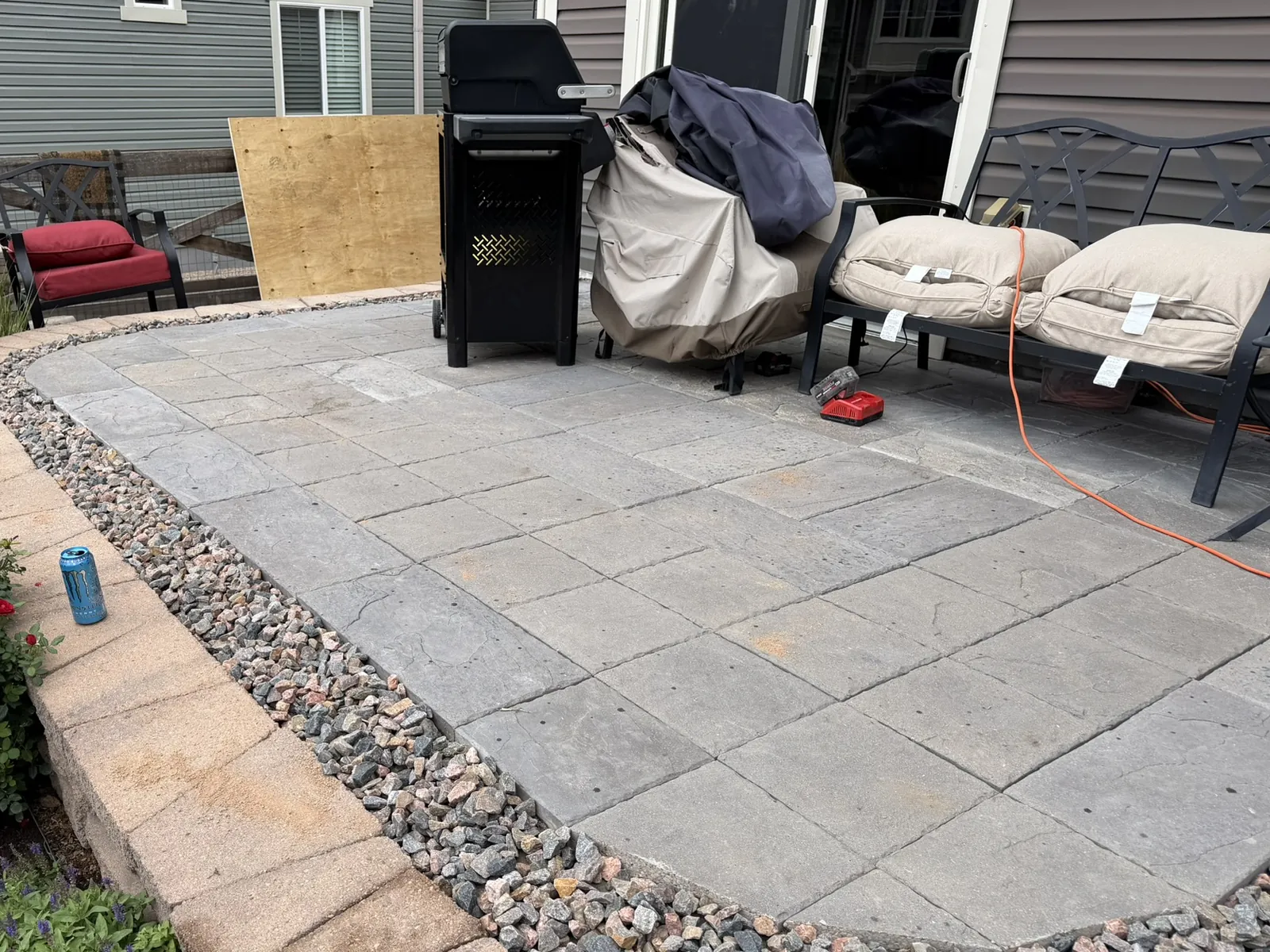
How a paver patio should be built
Pavers themselves almost never fail. What's under them does. Here's how we build every patio and walkway:
- Dig out deep enough for the full base, below the finished height.
- Lay 6–8 inches of road base, compacted in lifts rather than one thick layer.
- Screed 1 inch of sand as the bedding layer.
- Lay the pavers and cut them in.
- Lock the edges with edge restraint so the field can't spread.
- Sweep polymeric sand into the joints so they lock together and shed water.
Skip or shortcut any of those steps and the patio will tell you, usually within a winter or two. More on our paver patios.
The real reasons pavers sink
- Not enough base. A couple inches of base, or pavers set right on dirt and sand, can't spread the load.
- Base that wasn't compacted in lifts. A compactor can't reach the bottom of one thick layer, so the base keeps settling after the job is done.
- Water. Downspouts dumping onto the patio, sprinklers spraying it, or a patio pitched toward the house keeps the soil underneath soft.
- Freeze-thaw. Water in the soil freezes, expands and lifts the pavers, then drops them when it thaws. Colorado winters run that cycle over and over.
- No edge restraint. Without a locked edge, the outer pavers creep outward and the edges drop.
- Joint sand washing out. Once the joints empty, pavers shift, rock and let weeds and ants in.
- Settling backfill. Next to newer homes, the soil along the foundation is often backfill that can keep settling for years.
See it happen
Install day: thin base and no edge restraint. Looks fine.
Install day: 6–8 inches of compacted road base, 1 inch of sand, edge restraint.
How to tell what went wrong
- One low spot: usually soft base or water getting in at that spot. Look for a downspout or sprinkler nearby.
- Edges dropping or spreading: missing or failed edge restraint.
- The whole patio rolls or waves: the base was too thin or never compacted properly.
- Low along the house: settling backfill, water from the roof, or both.
- Gaps, weeds and wobbly pavers: joint sand has washed out.
How to fix a sinking paver patio
For a low area, we pull up the pavers in that section, dig out the soft material, add road base and compact it, screed new bedding sand, relay the same pavers, and lock the joints with polymeric sand. We also fix whatever let the water in, like a downspout or a sprinkler head, or the dip will come back.
If the whole patio is moving, patching one spot just moves the problem. The fix is lifting the pavers, rebuilding the base to spec, and relaying them. Pavers in good shape can usually be reused, which saves on material.
One thing that doesn't work: pulling pavers up and adding more sand underneath. Bedding sand isn't structural. It's there to set the pavers, and a thick sand layer just washes out and sinks again.
How to keep a patio from sinking
- Run downspouts away from the patio, or extend them past it.
- Aim sprinklers away from the pavers.
- Keep the joints full. Re-sand with polymeric sand when you see gaps.
- Fix a small low spot early, before water sitting in it softens the base around it.
Questions
Can sunken pavers be fixed without buying new ones?
Usually, yes. We lift the pavers, fix the base and relay the same ones. Only cracked or broken pavers need replacing.
Why are my pavers sinking next to the downspout?
Roof water is soaking the ground under that spot and softening the base. Moving or extending the downspout is part of the fix, along with rebuilding the base there.
Is it the sand under my pavers?
Rarely on its own. The 1 inch of bedding sand only sets the pavers. Sinking almost always comes from the road base under it, or the soil under that.
Do pavers heave in Colorado winters?
They can. If water gets into the soil under a thin base, freeze-thaw lifts and drops the pavers. A thick, compacted base and good drainage keep that from happening.
How much does it cost to fix a sinking patio?
It depends on how much of the patio is affected and what caused it. A low spot is a smaller job than rebuilding the whole base. We'll look at it and send a free itemized quote.
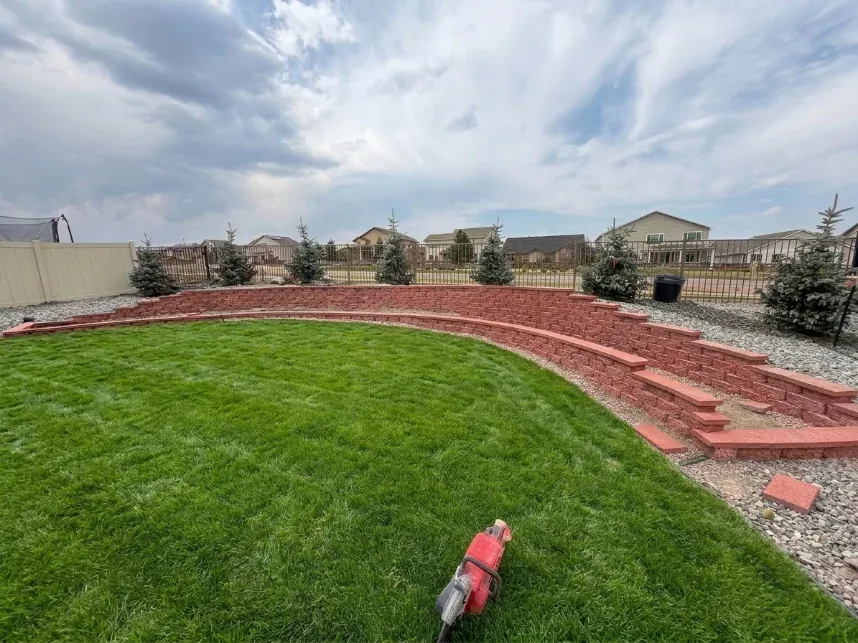 Retaining walls
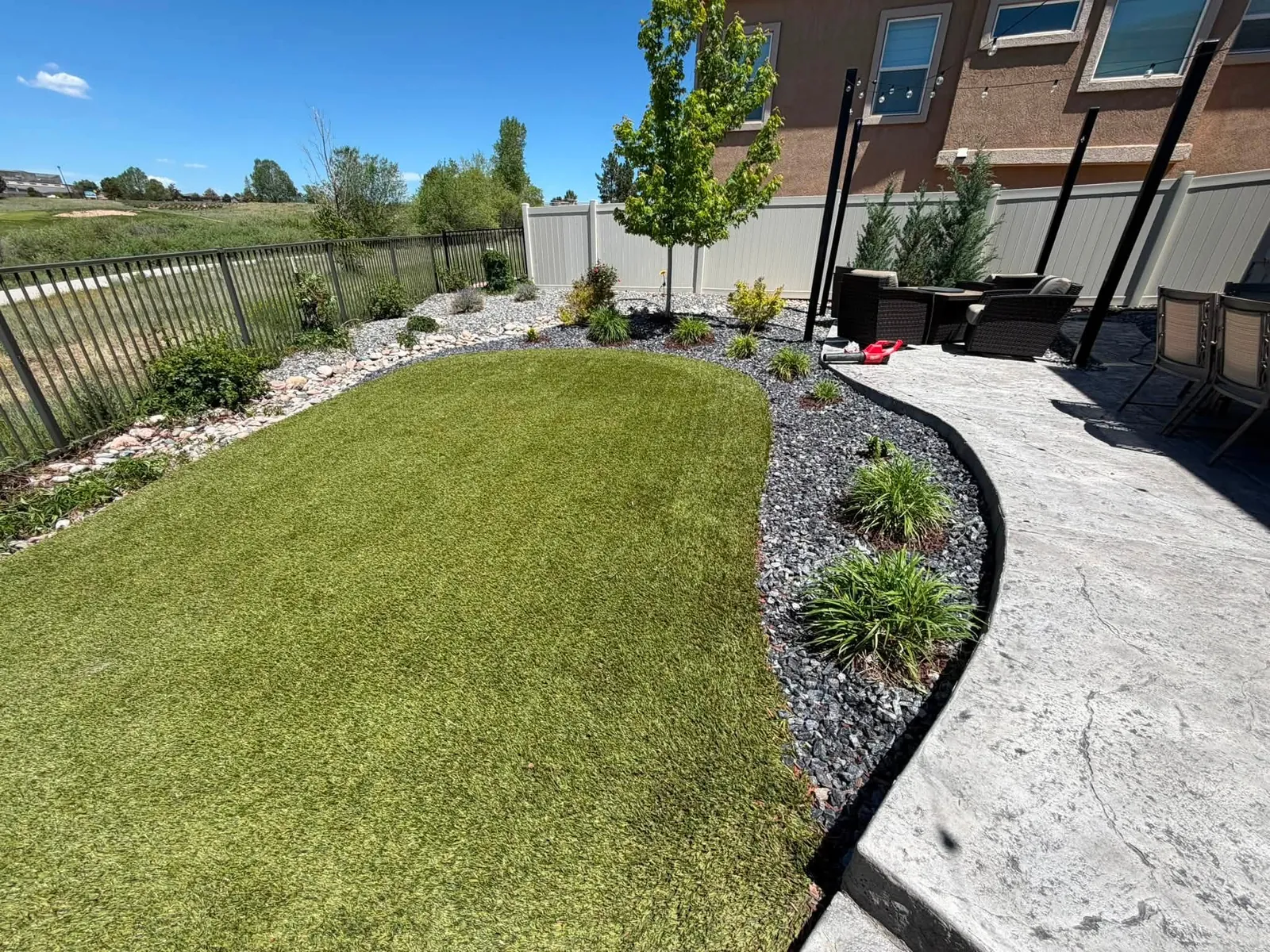 Landscaping & xeriscape